

Can You Refinance a Hard Money Loan Without Seasoning?
Yes — Here’s Exactly How DSCR Makes It Possible
The short answer: Yes — if you use a DSCR loan. There is no seasoning requirement, no title seasoning requirement, and cash-out is available down to a 620 FICO score. This guide explains exactly why, how it works, and when it makes sense for your investment strategy.
Let me ask you something.
You bought that property, did the work, maybe even got it rented. But now your hard money lender is calling — because that 12% interest rate loan was never meant to stay. You need out. And when you call a conventional lender, they hit you with the news: “Sorry, we need to see 6 to 12 months of seasoning before we can do a cash-out refinance.”
I’ve heard that story more times than I can count in 24 years of doing this. And every single time, my answer is the same: then stop talking to conventional lenders.
DSCR loans — Debt Service Coverage Ratio loans — don’t work like conventional mortgages. They don’t care how long you’ve owned the property. They don’t care about your W-2 or your tax return. They care about one thing: does the property earn enough to cover the loan?
If the answer is yes — you can refinance. Today. No waiting.
What Is “Seasoning” — and Why Do Conventional Lenders Require It?
In the mortgage world, seasoning refers to the length of time you’ve owned a property or held title before a lender will allow a cash-out refinance. Most conventional lenders — Fannie Mae, Freddie Mac, and traditional banks — impose seasoning requirements between six months and twelve months.
There’s also a separate concept called title seasoning, which refers to how long the current owner has been on title. Some lenders will decline a refinance entirely if title changed hands too recently, regardless of the loan balance or equity position.
From a risk management perspective, lenders use seasoning requirements to protect against inflated purchase prices — a technique sometimes used in fraud schemes where properties are purchased at artificially low prices, immediately refinanced at higher values, and cash is extracted before anyone notices.
The problem? Legitimate investors get caught in the same net.
If you used a hard money loan to close quickly on a distressed property, renovated it, stabilized the rental income, and now want to refinance into permanent financing — you’ve done nothing wrong. But a conventional lender’s seasoning clock doesn’t care about your renovation timeline or your exit strategy. It just keeps ticking.
“DSCR lenders evaluate the property’s current income position — not how long you’ve been holding title. That changes everything for BRRRR investors and anyone exiting short-term financing.”
The Two Types of Seasoning That Block Conventional Cash-Out
- Cash-out seasoning: A waiting period before equity can be extracted via refinance (typically 6–12 months from date of purchase)
- Title seasoning: A requirement that the current owner has held title for a minimum period before refinancing
DSCR programs — specifically the ones we work with at Jhenesis Mortgage — have neither requirement. The property is evaluated on its current rental income and current appraised value. That’s it.
Trapped in a Hard Money Loan?
Submit your scenario and we’ll tell you within one business day if a no-seasoning DSCR refinance works for your property.
This is not an offer or commitment to lend. Stacy Ann Stephens | NMLS #1933745 | Jhenesis Mortgage NMLS #2532705
How DSCR Loans Work — and Why Seasoning Doesn’t Apply
A DSCR loan qualifies a borrower based on the property’s income relative to its debt obligations, not the borrower’s personal income. The Debt Service Coverage Ratio is calculated as:
DSCR Formula
DSCR = Monthly Gross Rent ÷ Monthly PITIA
PITIA = Principal + Interest + Taxes + Insurance + HOA (if applicable)
A ratio of 1.00x means rent equals the payment exactly. A ratio above 1.00x indicates positive cash flow. Below 1.00x means the property has a coverage gap — some programs allow this with compensating factors.
Because DSCR underwriting centers entirely on the property’s financial performance, it doesn’t rely on the historical ownership timeline. A lender approving a DSCR cash-out refinance is asking: “Does this property generate sufficient income to support this loan today?” — not “How long has this borrower owned it?”
That’s a fundamentally different question. And for real estate investors, it’s a much more favorable one.
What DSCR Lenders Do Evaluate
- Current appraised value (or AVM for eligible properties)
- Gross monthly rental income (long-term or short-term)
- Borrower credit score (minimum 620 for cash-out)
- Loan-to-value position (max 75% for cash-out refi; 85% for purchase)
- Property type and condition
- Lease agreements or rental history (or AirDNA for STR)
What DSCR Lenders Do NOT Require
- Personal tax returns or W-2s
- Employment history or income verification
- Ownership seasoning or title seasoning
- Reserves (depending on program — our DSCR 2nd has no reserve requirement)
- Debt-to-income ratio calculations based on personal income
The Two Programs: DSCR First Lien vs. DSCR Second Mortgage
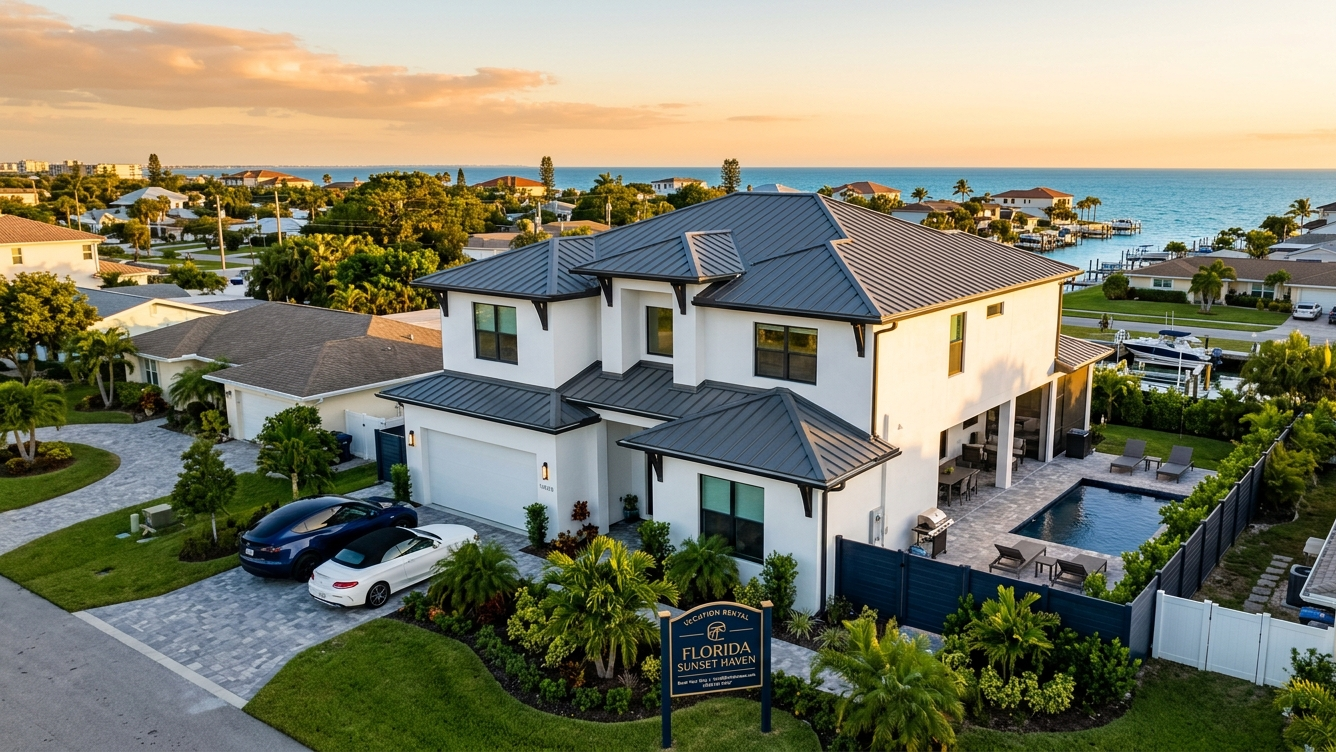
DSCR programs for rental and investment property investors — first lien and second lien options available
When it comes to no-seasoning DSCR financing, investors have two main tools available. Choosing the right one depends on your current loan situation, rate environment, and equity goals.
Option 1: DSCR First Lien — Cash-Out or Purchase
This is a full refinance that pays off your existing loan and replaces it with a new DSCR mortgage. If you have a hard money or bridge loan, this is typically the cleanest exit.
| Feature | DSCR 1st Lien | Conventional |
|---|---|---|
| Seasoning Requirement | None | 6–12 months |
| Title Seasoning | None | Required |
| Personal Income Required | No | Yes (DTI) |
| Max LTV (Purchase) | 85% | 80% |
| Cash-Out Min FICO | 620 | 680+ |
| STR / Airbnb Income | Accepted | Typically not counted |
| AirDNA on Purchase | Yes | No |
| 100% Investor Concentration | Yes | No |
Option 2: DSCR Second Mortgage — Access Equity Without Touching Your First
Here’s a scenario I hear often: “I locked in a 5.5% rate in 2022. My property has appreciated significantly. I want to pull equity out — but I absolutely do not want to lose my rate.”
That’s exactly what the DSCR second mortgage was built for. You keep your existing first lien untouched. We add a second lien behind it — qualified on DSCR — and you access the equity without refinancing.
DSCR Second Mortgage Program Highlights
- ✓ Max CLTV: 80% (combined with first lien)
- ✓ Minimum DSCR: 1.00x
- ✓ Loan amounts: $75,000 – $750,000
- ✓ No reserves required
- ✓ STR / Airbnb income accepted
- ✓ AVM accepted on values over $400,000
The DSCR second is also a powerful tool for portfolio builders who need to recycle equity across multiple properties. Instead of selling or triggering a full refinance event, you access the equity strategically and deploy it into your next acquisition.
Who Needs a No-Seasoning DSCR Refinance Right Now?
This isn’t a product for everyone. But if you recognize yourself in any of these scenarios, it’s worth a 20-minute conversation.
🔨 The BRRRR Investor
Buy, Rehab, Rent, Refinance, Repeat — the BRRRR strategy only works if the refinance step is accessible. When conventional seasoning rules block that refinance for 6 to 12 months, your capital is locked and the strategy stalls. DSCR cash-out with no seasoning restores the rhythm of the BRRRR model. Once the property is rented and covers the debt, you can pull your equity out and go again.
🌉 The Bridge Loan Borrower
Bridge loans are intentionally short-term — typically 6 to 18 months. They’re designed to be replaced. If yours is maturing, or if the interest rate is killing your cash flow, a no-seasoning DSCR refi is the most direct path to a permanent solution. No waiting. No worrying about conventional seasoning windows.
🏖️ The Airbnb and Short-Term Rental Owner
STR investors have historically struggled to qualify for refinancing because most lenders won’t count Airbnb income as qualifying rental income. DSCR programs accept STR income — and for purchases, AirDNA projections are accepted in place of an existing rental history. That means you can finance or refinance a vacation rental property based on what it’s projected to earn, not just what you’ve already documented.
📁 The Portfolio Investor Who Needs to Recycle Capital
If you’re building a portfolio of rental properties, you need a systematic way to access accumulated equity and redeploy it into new acquisitions. The DSCR second mortgage lets you tap that equity property by property without disrupting existing rates or triggering a full refinance cycle on each asset.
🧾 The Self-Employed Investor
This one hits close to home for a lot of my clients. They’ve been strategic about minimizing taxable income — a legitimate approach — but that same strategy penalizes them when they walk into a conventional lender. DSCR doesn’t touch your personal taxes. The property’s numbers are the application.
🌍 The Foreign National Investor
International buyers investing in U.S. real estate often face additional barriers in conventional lending. DSCR loans — particularly with lenders who specialize in non-QM and foreign national programs — offer one of the most accessible paths to investor financing. Ask us about foreign national DSCR eligibility specifically.
Does Your Scenario Qualify?
Tell us about your property and your goal. We’ll review it and come back to you with options — not a sales pitch — usually within one business day.
This is not an offer or commitment to lend. Stacy Ann Stephens | NMLS #1933745 | Jhenesis Mortgage NMLS #2532705
Step-by-Step: How to Exit a Hard Money Loan Using DSCR
The process is simpler than most investors expect. Here’s what it typically looks like:
- Know your numbers before you call. Pull together your estimated property value, current loan balance, and monthly gross rent. These three numbers are the core of every DSCR scenario. If you have a lease or Airbnb earnings report, have that ready too.
- Submit your scenario for review. Use our DSCR Scenario Submission page or call us directly. We’ll review your numbers and confirm which program fits within one business day.
- Get your term sheet. Once we’ve confirmed a fit, we’ll outline the expected loan amount, rate range, and cash-out position based on your scenario. No obligation at this stage.
- Application and documentation. DSCR documentation is lean compared to conventional loans — no tax returns, no W-2s. We’ll typically need credit authorization, property information, and a lease or rental income documentation.
- Appraisal or AVM. Depending on the loan amount and property value, we may order a full appraisal or use an automated valuation model (AVM). AVM is accepted on eligible properties valued above $400,000 for the DSCR second mortgage program.
- Underwriting and clear to close. Once underwriting approves the file, we schedule closing. For a straightforward refi, this process can move in as few as 21 days. The hard money or bridge loan is paid off at closing, and you walk away with your new permanent rate — and potentially cash in hand.
⏱️ Timeline Realistic Expectation
DSCR refinances typically close in 21–30 days from full application. Complex scenarios (multiple properties, STR income verification, title issues) may take longer. If your hard money loan is maturing in under 30 days, call us directly — don’t submit a form — so we can prioritize your file. (407) 630-9766
Short-Term Rentals and DSCR: The AirDNA Advantage
One of the most significant advantages of DSCR loans for Florida investors is how they handle short-term rental income. Conventional lenders typically require 12 to 24 months of documented STR income — meaning if you bought a vacation rental recently, you’re stuck waiting.
DSCR programs take a different approach. For purchases, AirDNA rental projections can be used to establish the qualifying income. AirDNA is a data platform that analyzes actual nightly rates, occupancy patterns, and seasonal demand for specific addresses. It’s not a guess — it’s a data-driven income estimate that many DSCR lenders now accept as documentation.
For refinances, lenders will typically look at a combination of actual rental history and AirDNA benchmarks. If your STR has been running for a year or more, your actual platform earnings data (from Airbnb’s host dashboard or VRBO’s payout history) will be the primary income document.
Florida STR Markets Where This Matters Most
- Orlando / Kissimmee — near Disney and Universal, heavy investor demand
- Miami Beach and South Florida
- Tampa and St. Pete Beaches
- Destin, Panama City Beach, and the Emerald Coast
- Jacksonville Beaches
- Cape Coral and Fort Myers
If your property is in or near any of these markets and you’re trying to exit a hard money or bridge loan, there’s a very good chance DSCR qualifies you where conventional financing cannot.
Frequently Asked Questions About DSCR No-Seasoning Refinancing
Yes — with a DSCR loan. Conventional lenders typically require 6 to 12 months of ownership before allowing a cash-out refinance. DSCR loans have no seasoning requirement and no title seasoning requirement. As long as the property’s rental income covers the new loan payment at a qualifying DSCR ratio (and credit meets minimum standards), you can refinance immediately after purchase. This is one of the primary reasons real estate investors use DSCR loans as a planned hard money exit strategy.
A DSCR (Debt Service Coverage Ratio) loan is a type of investment property mortgage that qualifies the borrower based on the property’s rental income rather than the borrower’s personal income. The lender divides the monthly gross rent by the monthly mortgage payment — if the result (the DSCR ratio) meets the minimum threshold, the loan is approved. There are no personal tax returns, W-2s, or debt-to-income calculations required. This makes DSCR ideal for self-employed investors, portfolio investors, and anyone whose personal income documentation doesn’t reflect their real financial position.
The minimum FICO score for a DSCR cash-out refinance is 620 under current program guidelines at Jhenesis Mortgage. Higher credit scores — 680, 700, 720 — will typically unlock better rates and higher LTV options. A 620 FICO is significantly more accessible than the 680 to 720 minimums commonly required by conventional lenders for investment property cash-out refinancing.
Title seasoning refers to the length of time the current owner has been on title (the legal ownership record) before a lender will approve a refinance. Many conventional and even some non-QM lenders require the current owner to have held title for at least three to six months — sometimes longer. No title seasoning means there is no such waiting period. The refinance can be processed regardless of when title was acquired. This is particularly important for investors using quick-close strategies, assignment transactions, or those who recently completed a title transfer as part of an entity restructuring.
For a DSCR first-lien cash-out refinance, the maximum LTV (loan-to-value) is typically 75%. That means if your property appraises at $400,000, the maximum total loan amount is $300,000. If your current hard money balance is $240,000, the gross cash-out would be $60,000 before closing costs. For a DSCR second mortgage, the maximum CLTV (combined loan-to-value) is 80%, with loan amounts ranging from $75,000 to $750,000. The actual cash-out amount available depends on the appraised value, credit score, DSCR ratio, and current liens.
Yes. DSCR loans at Jhenesis Mortgage accept short-term rental income from Airbnb, VRBO, and similar platforms. For purchases, AirDNA income projections are accepted in place of an existing rental history — this means you can qualify a new STR property for a DSCR loan without needing 12 months of documented bookings first. For refinances, a combination of actual platform earnings history and AirDNA data can be used. This makes DSCR one of the only loan types genuinely designed for vacation rental investors.
A DSCR second mortgage is a second lien placed on an investment property behind an existing first mortgage. Instead of refinancing the first loan, you add a second loan to access equity while preserving your current first-lien rate and terms. This is the right tool when your existing first lien has a rate that is significantly better than today’s market and you don’t want to lose it. The DSCR second at Jhenesis Mortgage allows up to 80% CLTV, loan amounts from $75,000 to $750,000, requires no reserves, accepts STR income, and has a minimum DSCR of 1.00x.
No. DSCR loans do not require personal tax returns, W-2s, or pay stubs. Qualification is based entirely on the property’s gross rental income versus its debt obligations. This is one of the defining characteristics of DSCR as a loan type and the primary reason self-employed investors, business owners, and high-net-worth individuals with complex tax situations use DSCR over conventional investor loans.
A straightforward DSCR refinance typically closes in 21 to 30 business days from a complete application. The timeline depends primarily on appraisal scheduling and underwriting volume. AVM (automated valuation model) eligible properties can move faster since no physical appraisal is required. If your hard money loan is maturing soon, contact Jhenesis Mortgage directly by phone at (407) 630-9766 rather than submitting an online form so we can prioritize the file.
The maximum LTV for a DSCR purchase loan is 85% under current program guidelines. This means an investor purchasing a $400,000 property would need a minimum down payment of approximately $60,000 (15%), not including closing costs. An 85% LTV purchase is higher than many competing DSCR programs, which commonly cap at 80%, and allows investors to deploy less capital per deal while maintaining DSCR qualification on the rental income. DSCR loans in Florida are available for single-family, 2-4 unit, and certain multifamily investment properties.
Investor concentration refers to the percentage of units in a building or condominium complex that are investor-owned (non-owner-occupied). Many conventional and conforming loan programs cap investor concentration at 50% or less — meaning if more than half the units in a condo building are investment properties, those units may not be eligible for financing. A 100% investor concentration allowance means there is no restriction based on how many other units in the building are investor-owned. This is particularly valuable for condo investors in Florida markets like Miami, Orlando, and Tampa where investor-heavy buildings are common.
Yes — DSCR is often considered the ideal financing tool for the BRRRR (Buy, Rehab, Rent, Refinance, Repeat) investment strategy. The BRRRR method depends on being able to extract equity after stabilizing a property and recycling that capital into the next acquisition. Conventional seasoning requirements block this — DSCR eliminates the bottleneck. Once the property is rented and the DSCR ratio qualifies, you can refinance and pull cash out immediately regardless of how recently you purchased it. Many BRRRR investors pair a hard money or private money loan for the acquisition and renovation phase, then exit into a DSCR permanent loan once the property is leased.
Have a Scenario That Doesn’t Fit Neatly Into a FAQ?
That’s where I do my best work. Complex files — multiple liens, STR income, recent acquisition, credit challenges — submit it and let’s look at the actual numbers together.
This is not an offer or commitment to lend. Stacy Ann Stephens | NMLS #1933745 | Jhenesis Mortgage NMLS #2532705