
The One-Time-Close Construction Loan: Build Your Home Without Two Closings or Two Rates
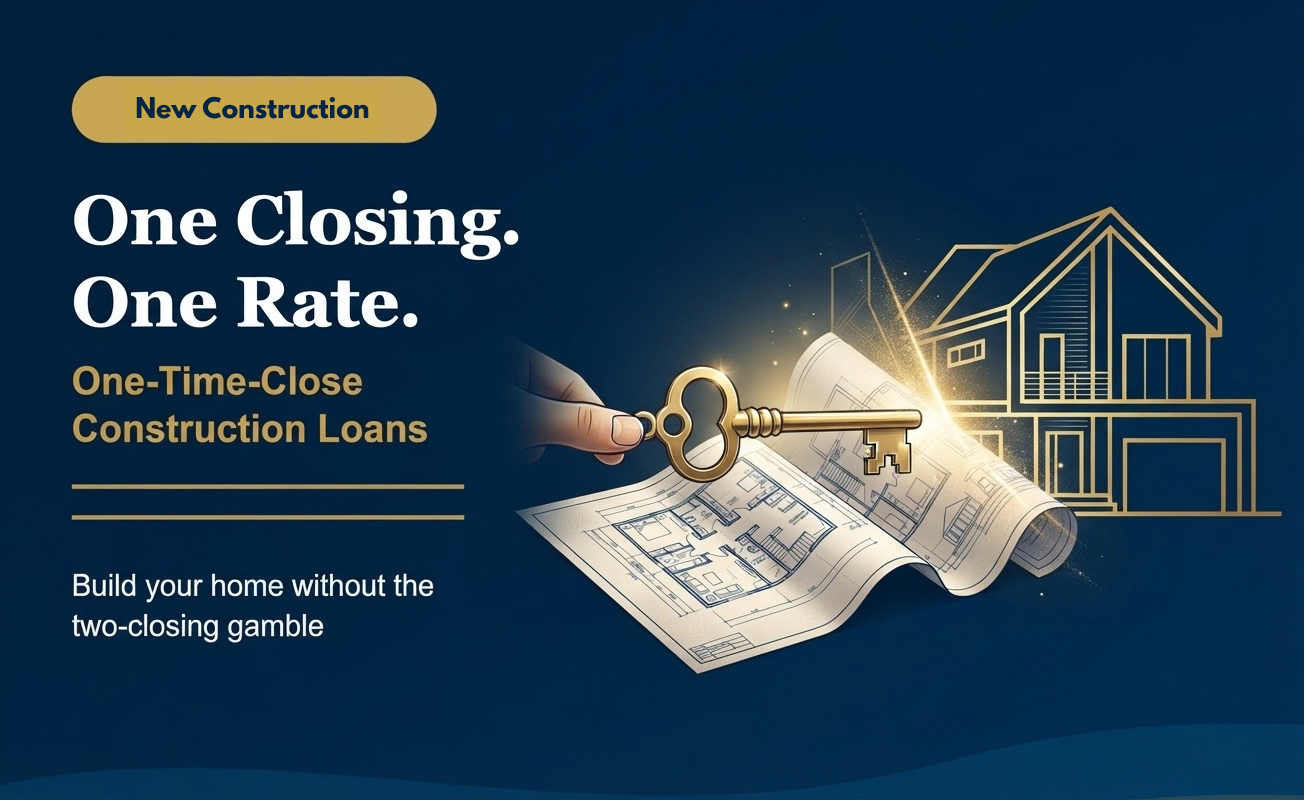
Traditional construction financing makes you close twice and gamble on rates in between. A one-time-close loan was built to end both problems.
If you’ve started pricing out building a home, you’ve probably run into the same unpleasant surprise most buyers do: a traditional construction loan usually means closing twice. Once to fund the land and construction, and again later to refinance into your permanent mortgage once the home is finished.
Two closings mean two sets of closing costs. It also means your rate isn’t locked for the permanent loan until months (sometimes a year or more) after you started, which is a real gamble in a market where rates move.
A one-time-close construction loan was built to solve exactly this. Land, construction, and your permanent mortgage are combined into a single closing, with one set of costs and, in most cases, one rate established before the first shovel goes into the ground. Here’s how it actually works.
Thinking about building instead of buying?
Before you sign with a builder’s in-house lender, let’s see what a one-time-close option could save you in costs and rate risk.
Get My Construction Financing OptionsThe Two-Closing Problem It Solves
Here’s what a traditional construction-to-permanent process usually looks like without a one-time-close structure:
| Step | Traditional (Two-Close) | One-Time-Close |
|---|---|---|
| Closing #1 | Fund land + construction loan | Fund land + construction + permanent loan, all at once |
| During construction | Interest-only payments on funds drawn | Interest-only payments on funds drawn |
| Rate for permanent loan | Not locked until the second closing, months later | Typically locked (or has a float-down option) before construction starts |
| Closing #2 | Refinance into permanent mortgage — new closing costs, new underwriting | Doesn’t exist — the loan automatically converts |
| Total closing costs | Two full sets | One set |
The savings aren’t just the duplicate closing costs, real as those are. It’s the rate risk. If rates move upward during an 8-12 month build, a two-close borrower finds that out at the worst possible time: right when they’re trying to finalize their permanent loan.
How Draws and the Build Timeline Work
During construction, the loan functions similarly to a traditional construction loan: funds are released in draws tied to completed stages of the build (foundation, framing, drywall, final completion, for example), and you typically pay interest only on the amount actually drawn, not the full loan amount, while the home is being built.
Once the home is complete and passes final inspection, the loan converts automatically into a standard long-term mortgage, usually with no new application and no second underwriting process to pass through, since it was already qualified and locked at the original closing.
Two-Close vs. One-Close Cost Comparison
Estimate what a second closing would cost you under a traditional two-close structure.
Who This Is Built For
- Buyers building on a lot they already own — the land’s equity can often count toward your down payment.
- Buyers purchasing in a new-construction community with an approved builder, where the home follows a defined build timeline.
- Buyers who want rate certainty rather than hoping rates hold steady or improve over a year-long build.
- Buyers who don’t want to qualify twice — once for construction, once again for the permanent loan — especially if their income situation could shift in the meantime.
It’s not the right fit for every build — owner-builders acting as their own general contractor, for example, often face more restrictions than builders working with licensed, approved contractors. That’s worth a direct conversation before you commit to a lot or a builder contract.
Ready to see if your build qualifies for one-time-close financing?
Whether you’re buying a lot, already own one, or you’re looking at a specific new-construction community, let’s map out your financing before you sign anything with a builder’s preferred lender.
Schedule My Construction Loan ConsultationOne-Time-Close Construction Loans: Common Questions
Can I use a one-time-close loan if I already own my lot?
In many cases, yes — the equity in a lot you already own free and clear (or have paid down significantly) can often count toward your required down payment or equity contribution.
What credit score do I need for a one-time-close construction loan?
Requirements vary by program, but construction lending generally expects stronger credit than a standard purchase loan, since the lender is funding a project that doesn’t exist yet. We’ll review your specific profile against current program guidelines.
What happens if construction costs run over budget?
This is worth planning for before you break ground — most one-time-close structures expect a contingency reserve, and cost overruns beyond that reserve may require the borrower to cover the difference out of pocket rather than rolling it into the loan after the fact.
Can I lock my rate before construction even starts?
Many one-time-close programs allow the rate for the permanent loan to be established at the initial closing, sometimes with a float-down option if rates improve before the home is finished. The specific terms depend on the lender and program.
What happens if my builder delays the project significantly?
Extended delays can affect your construction loan’s terms, including interest-only payment duration — it’s worth understanding your lender’s policy on extensions before you sign your builder contract, not after a delay happens.