

Why Your Credit Report Still Shows a Balance You Already Paid (And How to Fix It Before You Apply)
You pay your cards in full every month. Your credit report says you owe. Here is why, and the timing trick that clears it.
This one frustrates good borrowers all the time. You pay every card in full, on time, every month. You apply for a mortgage. And your credit report shows balances anyway, sometimes a lot of them.
It feels unfair, and it is easy to assume something is wrong. Nothing is wrong. It is a timing issue, and it is one of the few credit fixes that costs you nothing.
Here is how it works, how it affects your approval, and the date you actually need to circle on the calendar.
Pay in full but still showing a balance?
Send me your report and I will show you which cards are costing you qualifying power and what date to pay them.
Review My Credit TimingStatement Date vs. Due Date: The Part Nobody Explains
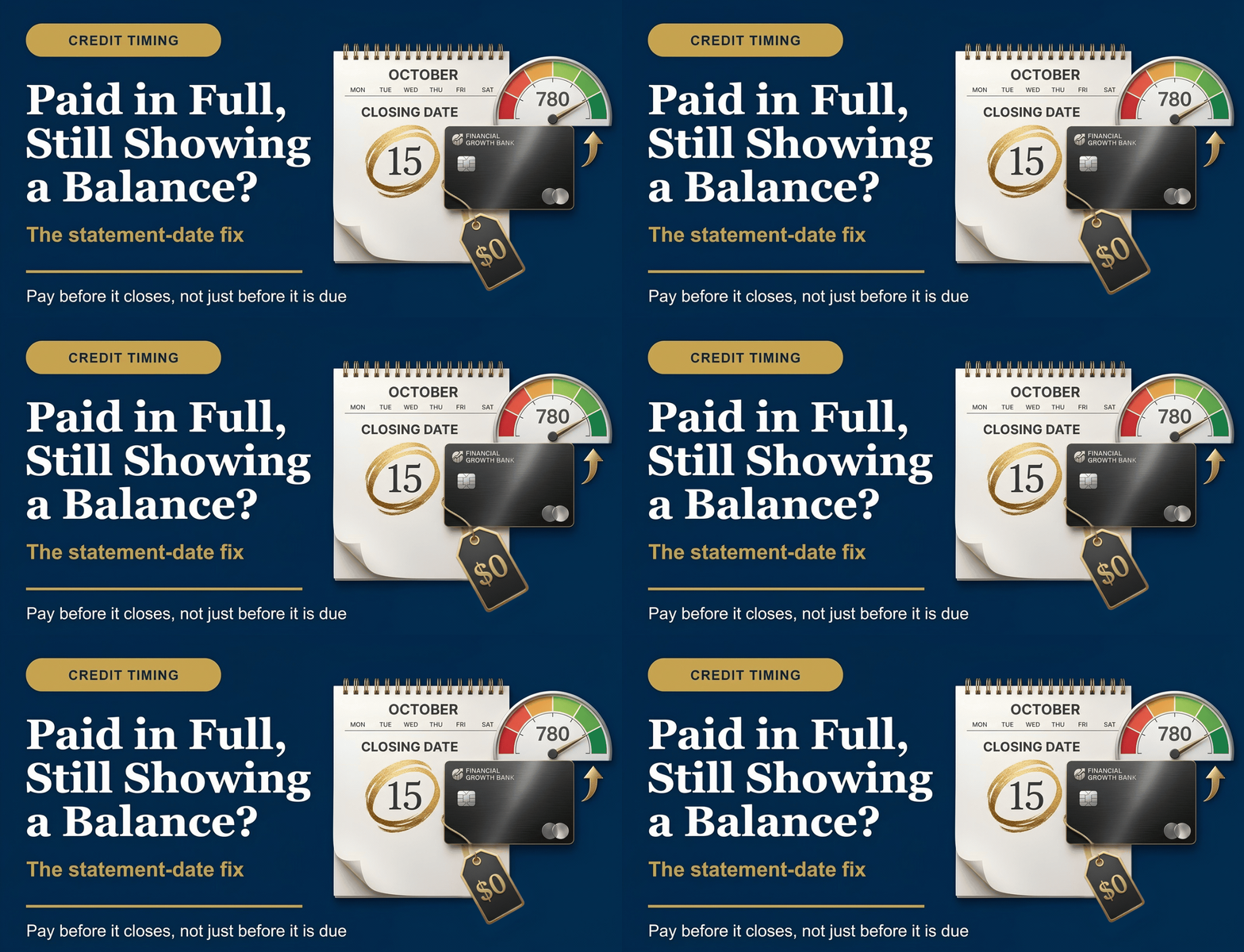
Every card has two dates that matter. The statement closing date is when the card company totals up your balance and reports it to the credit bureaus. The due date comes about three weeks later, and that is when you pay without interest.
If you spend $2,000 during the month and pay the full $2,000 by the due date, you never pay interest. But the bureaus received $2,000 as your balance on the statement date. Your report says you owe $2,000, even though you will never carry it.
| Event | What happens |
|---|---|
| Statement closes | Balance is totaled and reported |
| Due date (about 3 weeks later) | You pay in full, no interest |
| Credit report | Still shows the statement balance |
How That Reported Balance Hits Your Approval
Two things get affected. First, your credit utilization, meaning how much of your limit looks used. High utilization can lower your score. Second, your debt-to-income ratio. If the report lists a minimum payment, that number is used. If a balance shows with no minimum payment, many lenders and standard guidelines count roughly 5 percent of the balance. A card showing $0 counts as $0.
Five percent sounds small until you add up several cards. And it can be the difference on a file that is already close to the limit.
Want a lender to look at the real effect on your ratio? Start a scenario review
Statement-Date Planner and DTI Check
Find your pay-by date, and see what reported balances may add to your debt-to-income ratio.
The Timing Fix, Step by Step
- Find each card’s statement closing date. It is on your statement or in the app, and it is different from the due date.
- Pay the balance to $0 about three to five days before it closes. That gives the payment time to post.
- Keep using the card normally afterward. New spending will appear on the next statement, so aim to have a clean statement right before your credit is pulled.
- Repeat for a cycle or two before you apply. Then your report shows zero or very low balances when it counts.
- Do not close the cards. Closing them can shrink your available credit and raise utilization.
Timing matters, so tell your mortgage broker before you pull credit. We can sometimes wait a cycle to give you the best possible report instead of running it too early.
Want your best possible credit report on the day it counts?
I will walk through your cards, your dates, and the best week to pull your credit, so your approval reflects how you actually manage money.
Book My Credit Timing CallCredit Card Balances and Mortgages: Common Questions
Why does my credit report show a balance when I pay in full?
Because card companies report the balance on your statement closing date, before your payment is due. The balance is real on that day even if you pay it off weeks later.
Does paying off my card before the due date fix the report?
Not by itself. You need to pay before the statement closes. Paying on the due date resets the balance to zero, but only after the old balance has already been reported.
How do lenders count credit card debt in my debt-to-income ratio?
If a minimum payment is listed, they use it. If a balance appears without a minimum payment, many guidelines use about 5 percent of the balance. A $0 balance counts as $0.
Should I close my credit cards before applying for a mortgage?
Usually not. Closing cards can reduce available credit, raise utilization, and shorten your credit history. Paying balances down is typically better.
How long before I apply should I start this?
One to two billing cycles before your credit is pulled is a good rule. If you are buying soon, tell your broker so the credit pull is timed right.